May 1, 2026
#
Risk management
by
GIA Group

Contents
Cargo theft used to look like a broken trailer lock or a missing pallet. Today, it may look like a perfectly normal load booking—until the truck never arrives, the freight disappears, and the carrier that picked it up never existed.
According to data cited by logistics executives and industry researchers, cargo theft costs the U.S. trucking industry as much as $6.6 billion per year—more than $18 million every single day. And the methods behind those losses have changed fundamentally. The threat is no longer just physical. It is digital, organized, and in many cases international.
This article explains how modern cargo theft works, what role international dispatchers play in freight fraud schemes, how these situations affect insurance coverage, and what carriers and brokerages across the transportation industry may find relevant to their operations.
What is cargo theft in the freight industry today?
Cargo theft in trucking is not a single crime—it is a category of schemes that range from physical trailer hijacking to sophisticated digital fraud conducted entirely online, often from outside the United States.
Strategic theft—defined as using deception to trick someone in the supply chain into handing over freight willingly—has grown from less than 5% of all cargo theft to roughly a third of all incidents. Between 2022 and 2024, while overall cargo theft rose 93%, strategic theft rose 1,475%.
According to research from the American Transportation Research Institute (ATRI), total cargo theft losses to carriers and logistics providers have reached as high as $6.6 billion annually, with direct losses averaging over half a million dollars per carrier when indirect costs are included.
The shift from physical crime to fraud-based crime is relevant across the trucking industry—carriers, brokerages, and shippers alike—because fraud-based theft targets systems and relationships at every point in the supply chain, not just the truck itself.
Who are international dispatchers and what do they do?
Most international dispatchers are legitimate operations providing real value for small carriers that cannot afford in-house staff. A significant number of these services operate internationally, particularly from Eastern Europe, Central Asia, and parts of Latin America. The risk arises when the same access that legitimate dispatchers require—MC numbers, FMCSA credentials, communication channels—is exploited by bad actors.
According to TAPA EMEA's president and CEO Thorsten Neumann, criminals are increasingly using digital tools to conceal their true identities, creating shell companies and cloning legitimate firms using stolen credentials. Forged email addresses, look-alike domains, and fake insurance certificates are increasingly common, he warned.
When a dispatcher has access to a carrier's identity (or steals it), the potential for fraud expands significantly.
How the most common fraud schemes actually work
Double brokering
Double brokering is currently the most reported form of freight fraud in the United States.
In a double brokering scheme, criminals steal a legitimate carrier's identity, pass a broker's vetting process, and secure a load. They then pose as a broker and hire an unsuspecting motor carrier to haul it, inserting themselves as an invisible middleman.
The result: the real carrier hauls the freight and expects payment from the bad actor, not from the original broker. The shipper's freight may arrive—or it may not. Either way, the broker may be caught between two parties with legitimate-looking claims, and the money may be moved to a deceptive entity that is often impossible to trace.
A joint survey by FreightWaves and TriumphPay found that 85% of respondents—freight brokers and carriers—were impacted by double brokering in Q2 2023 alone.
Carrier identity theft
Identity theft in freight works differently from consumer identity theft. Instead of stealing personal financial information, criminals take over a legitimate motor carrier's FMCSA operating credentials: the MC number, DOT number, insurance certificates, and contact information.
The top attack vectors in 2024 included:
identity theft (bad actors impersonating legitimate carriers to gain access to broker loads),
double brokering,
change in ownership (scammers buying old MC numbers from previously legitimate companies),
and FMCSA contact manipulation (unauthorized email and phone changes used to hijack legitimate carrier accounts).
Once a bad actor controls a carrier's FMCSA contact information, they are able to redirect communications, intercept load confirmations, and collect payments—while the real carrier has no idea their identity is being used.
FMCSA contact manipulation
This is one of the more technically specific methods and one that is difficult to detect without active monitoring.
According to Highway's Q3 2025 Freight Fraud Index, 149 unauthorized FMCSA contact changes were recorded in that quarter alone, meaning fraudulent changes were successfully made to the official contact records of legitimate carriers in the FMCSA database. When a broker calls the number on file to verify a carrier, they may be reaching the wrong party entirely.
Fictitious pickup
In a fictitious pickup, a criminal presents forged documentation (a fake bill of lading, fake driver credentials, a cloned carrier identity) and picks up a load at the shipper's dock as if they were the authorized carrier. The freight leaves on a legitimate-looking truck and disappears.
According to Verisk CargoNet's annual 2024 analysis, cargo theft reached a record 3,625 incidents in North America—a 27% increase from 2023—with strategic thefts including fictitious pickups and shipment diversions contributing significantly to that rise. The average value per incident was $202,364. In 2025, CargoNet reported that while total incidents remained similar, estimated losses surged 60% to nearly $725 million as criminal groups shifted toward higher-value targets.
Cyber-enabled load diversion
This is the most technically sophisticated method and the fastest-growing category.
Cargo cyber theft often begins with phishing emails that steal login credentials or dispatch documents, which are then used to pull off fictitious pickups or misdirect loads. In some cases, criminals use thread hijacking—piggybacking on existing email conversations between trusted parties—to inject fraudulent instructions without raising suspicion.
A broker receives an email that appears to be from a known carrier contact, changing the delivery address or the pickup driver at the last moment. The email is real—it came from a compromised inbox. By the time anyone realizes what happened, the freight is gone.
The Trojan Driver Scam
All of the schemes described above work by attacking the brokerage or carrier from the outside—fake identities, spoofed emails, forged credentials. The Trojan Driver Scam, documented by TAPA Americas in April 2026, works differently. It operates from the inside.
Theft ring operatives apply for and secure driver positions at legitimate, fully vetted trucking companies—passing standard hiring checks and operating normally until the right opportunity arises. Once assigned a high-value load, the driver parks the loaded truck at a predetermined location during what appears to be a routine break. A separate crew removes the freight while the driver is absent, making the theft look opportunistic rather than coordinated. The driver is then terminated for a protocol violation — exactly as the theft ring plans — and moves on to the next carrier to repeat the process.
What makes this approach particularly difficult to detect is that it exploits systems that are working as intended. The carrier's authority is clean, the vetting checked out, and the driver appears to be a victim of circumstance rather than a participant. By the time the load is gone, the conditions for the theft are already in place, and the situation looks entirely normal.
TAPA Americas recommends that freight brokers consider working with their carrier partners to require drivers to have been employed for a minimum of six months to a year before being assigned high-value loads. This threshold makes rapid cycling between carriers significantly harder for theft ring operatives to execute.
Why freight brokers are a primary target
Freight brokers sit at the center of the transaction. They have relationships with both shippers and carriers, control load tendering, and handle financial settlement. That makes them a valuable target for fraud schemes that need access to load information, carrier identity, or payment flows.
Highway's Q4 2025 Freight Fraud Index found that across every fraud vector, the same core weakness appeared: identity and authorization are assumed rather than verified. In 2025, Highway blocked 1,986,995 fraudulent email attempts (up 117% from 914,719 in 2024) and flagged 8,525,962 fraudulent phone numbers.
Brokers who rely primarily on assumed identity verification—rather than active confirmation—may face greater exposure to these schemes. These schemes specifically exploit broker verification habits to find the gaps.
According to a joint warning issued by IUMI and TAPA EMEA in February 2026, nearly 160,000 cargo-related crimes were recorded across 129 countries between 2022 and 2024, with total losses estimated to reach several billion euros. Cargo theft losses in North America reached $455 million in 2024, with over 3,600 reported incidents.
What cargo types are most at risk
Not all freight carries the same theft risk. Organized cargo crime tends to target shipments with high resale value, easy marketability, or minimal traceability.
High-risk cargo categories include:
Electronics: smartphones, laptops, components. High value per pound, easy to sell through informal channels, difficult to trace once separated from packaging.
Pharmaceuticals: both prescription and over-the-counter. High value, high demand, and can be resold through illegal distribution networks.
Food and beverages: particularly alcohol, energy drinks, and specialty items. Confirmed thefts have included more than $1 million worth of Guy Fieri's Santo Tequila—24,000 bottles stolen using fake carrier identities and spoofed emails—and a $400,000 lobster shipment hijacked en route to Costco locations in Illinois and Minnesota, now under FBI investigation.
Copper and metals: commodity value is tied to market prices, which have been elevated. Copper specifically has been a consistent target.
Apparel and footwear: high volume, easy to liquidate, difficult to identify once repackaged.
Standard dry van freight (basic household goods, building materials, general commodities) is lower risk by comparison, though not immune. Organized theft groups follow value, not freight type.
How cargo theft connects to insurance coverage
How cargo theft affects an operation from an insurance standpoint depends on the role in the transaction.
Motor carriers typically carry motor truck cargo insurance—coverage for physical loss or damage to freight while it is in the carrier's possession and care. This is the primary cargo coverage in a carrier's insurance program and is what responds when freight is stolen, damaged, or lost during transport.
Freight brokers carry a different set of products: contingent cargo, contingent auto liability, E&O, and cyber liability, each addressing a different dimension of the broker's exposure. Contingent cargo, for example, is not the carrier's policy — it is the broker's backstop for situations where the carrier's motor truck cargo coverage does not respond.
The section below focuses on the broker's coverage picture, since those products respond differently to fraud-related losses than carrier policies do.
Contingent cargo insurance is designed to address many situations that arise from cargo-related losses. How it applies in a specific situation depends on the policy terms and the nature of the loss.
A few things worth understanding:
Named-peril and all-risk contingent cargo policies are structured differently. Standard named-peril policies cover specific causes of loss listed in the policy—such as collision, fire, or theft. All-risk policies are broader in scope and may cover a wider range of loss scenarios, including some that arise from fraud-related incidents. Understanding which form is in place—and what it covers—is a practical starting point for any brokerage handling higher-risk cargo or complex freight arrangements.
Carrier identity fraud situations may involve multiple coverage considerations. When a load is picked up by someone misrepresenting their identity as a legitimate motor carrier, the broker's contingent cargo coverage may be among the policy lines relevant to that loss. How the policy responds may depend on its specific terms and the circumstances of how the carrier was selected and verified. Reviewing policy terms with an insurance advisor is the most reliable way to understand what applies in those situations.
Contingent cargo and cyber liability address different types of losses. If a broker's systems are compromised—credentials accessed, communications manipulated, or load information diverted—the resulting financial losses may fall under cyber liability coverage rather than cargo coverage. These are separate policy lines that serve distinct purposes, and brokerages handling significant freight volumes may find value in understanding how both fit into their overall program.
Carrier vetting practices and documentation are relevant to the overall risk picture. How a carrier was selected and whether that process is recorded are factors that may be relevant in a variety of situations—including claim reviews. Brokerages with consistent carrier verification practices tend to be better positioned to manage the risks posed by the current freight fraud environment.
What tends to reduce exposure to cargo fraud in trucking
The fraud landscape is evolving, and no single measure eliminates the risk. Carriers and brokerages that manage this exposure most effectively tend to have several practices in common.
Carrier contact changes are worth verifying directly with the FMCSA. When a carrier's phone number or email appears to have changed, cross-referencing that change through the FMCSA Company Snapshot at safer.fmcsa.dot.gov—rather than accepting it through the carrier's own communication—is a reliable way to catch potential contact manipulation before it affects a load.
Last-minute changes to loads are a documented fraud pattern. Reroutes, driver substitutions, and pickup instruction changes requested at the last moment—particularly by email or text—appear consistently in load diversion fraud cases. Highway's guidance suggests that written authorization for in-transit exceptions, confirmed through a trusted channel rather than the same communication making the request, is a meaningful control.
Ongoing carrier monitoring tends to be more effective than one-time vetting. Platforms including Highway, Carrier411, and RMIS (Relay) provide continuous visibility into carrier authority status, insurance certificates, and FMCSA contact changes—offering a more current picture than a single check at onboarding.
VoIP phone numbers are worth additional attention. The National Insurance Crime Bureau (NICB) identifies VoIP numbers as a common tool in dispatcher impersonation schemes—easy to create, difficult to trace, and frequently used to pass initial contact verification. Taking additional steps when a supply chain contact's number is identified as VoIP is a practice the NICB specifically highlights.
Documentation of carrier selection supports both operations and claim reviews. Keeping a record of when a carrier was verified, what source confirmed their insurance, and what the FMCSA record showed at that time creates a clear picture of how each booking decision was made—useful for internal accountability and relevant if a loss ever needs to be reviewed.
Contract terms are worth understanding alongside the insurance program. Shipper and broker agreements may include indemnification language that shifts financial responsibility for cargo loss. Knowing what those terms require—and whether the current coverage program aligns with them—is part of managing exposure before a situation arises rather than after.
Frequently asked questions
What is double brokering, and why is it a problem for the trucking industry? Double brokering happens when an unauthorized party accepts a load from a broker, then re-tenders it to a real carrier without authorization—collecting the broker's payment while the real carrier hauls the freight and may not get paid. The broker ends up with a payment dispute, a potential cargo liability, and a damaged relationship with both the shipper and the real carrier. Carriers may also be left unpaid or unknowingly involved in a fraudulent transaction.
Can contingent cargo insurance cover losses from freight fraud? It depends on the policy terms and how the fraud occurred. Some contingent cargo policies cover theft as a named peril—but whether fraud-based loss qualifies as theft under the policy language varies. All-risk contingent cargo policies are broader and may provide coverage in a wider range of fraud scenarios. Reviewing the specific policy terms with an insurance advisor is the most reliable way to understand what is and is not covered.
Is cargo theft from international dispatchers covered by insurance? The geographic origin of the fraud does not determine coverage—the policy terms and the nature of the loss do. A cargo loss resulting from a compromised dispatcher account may fall under contingent cargo coverage, cyber liability coverage, or both, depending on how the loss occurred and what policies are in place.
What cargo types carry the highest theft risk in trucking?
Electronics, pharmaceuticals, alcohol, copper, and specialty food items are consistently the most targeted categories. Carriers and brokerages handling these commodities regularly may find it worth reviewing whether their cargo coverage program—particularly the named peril vs. all-risk distinction — is appropriate for the freight being moved.
What are common indicators that a carrier's identity may have been compromised? Industry monitoring platforms and fraud researchers commonly identify several patterns: unexpected changes to carrier contact information, email addresses that differ slightly from previous correspondence, pressure to accept last-minute load or driver changes, and phone numbers identified as VoIP. Platforms like Highway and Carrier411 track FMCSA contact changes and authority status shifts and can surface these signals in real time.
How GIA Group, LLC approaches this
Cargo theft fraud has both operational and insurance dimensions—and the proper coverage in place may determine how well a brokerage is positioned when a fraud-related loss occurs. The type of coverage, the policy terms around fraud and theft, and whether cyber liability is included are all relevant to that picture.
GIA Group is an independent commercial transportation insurance agency working with freight brokerages, motor carriers, and logistics operations across the United States. As an independent agency, GIA Group works with multiple insurance carriers specializing in transportation risk to help carriers and brokerages find coverage aligned with current commercial transportation exposures—including contingent cargo, contingent auto liability, E&O, and cyber liability programs relevant to the current fraud environment.
For a coverage review or a quote, contact GIA Group at 855-876-0717 or visit https://giasure.com/coverages/motor-truck-cargo-insurance.
This article is for educational purposes and reflects general industry practices and publicly available research as of early 2026. It does not constitute legal or insurance advice. Coverage terms, availability, and pricing vary by operation and are subject to insurer review.
Read more valuable insights
Apr 21, 2025
Risk management
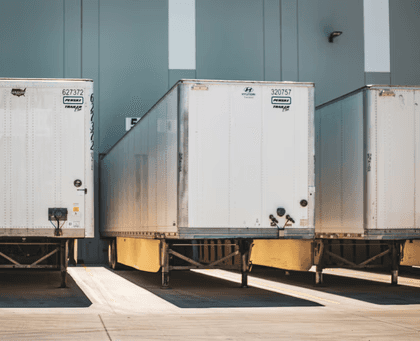
Cargo Thefts Are on the Rise
This overview maps the risk and outlines simple, proven defenses to keep shipments secure.
Button
Oct 28, 2023
Risk management
The High Cost of Motor Vehicle Accidents: A Closer Look
A closer look at human and financial cost of motor-vehicle crashes.
Read more
Mar 29, 2023
Risk management
The Crucial Role of Training and Adaptability in Trucking: Case
Why driver training and adaptability matter.
Button

Feb 15, 2023
Risk management
The Dangers of Speeding on the Road
Understanding the risks of speeding is critical for safety.
Read more