July 24, 2026
#
Insurance explained
by
GIA Group
Contents
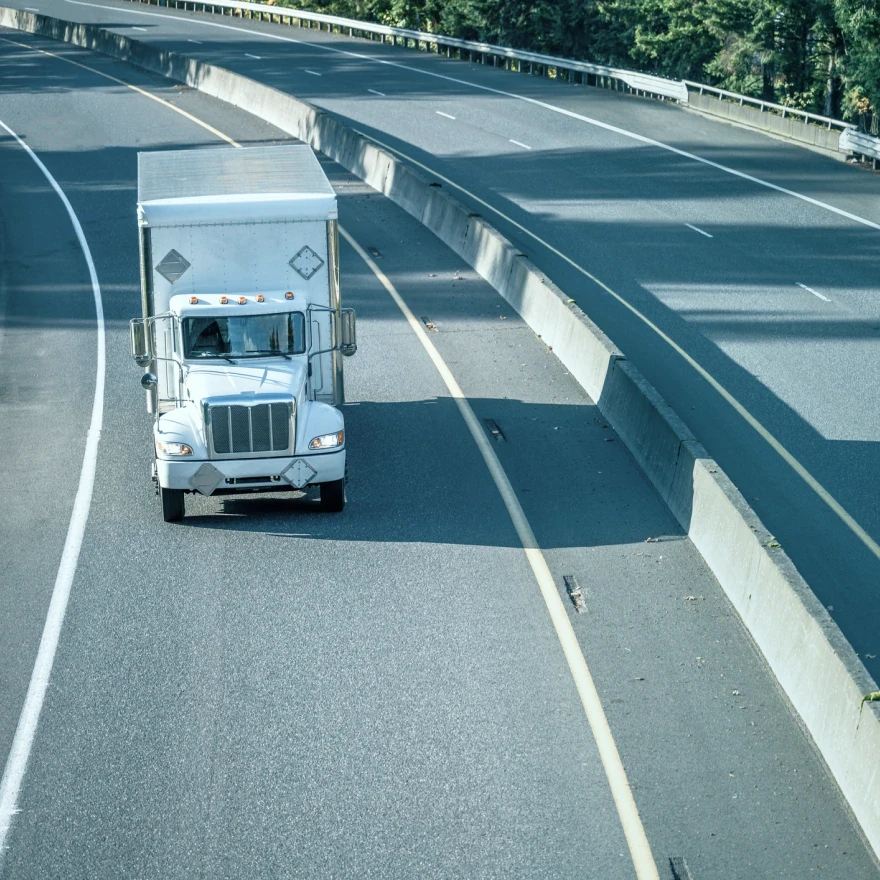
A box truck is one of the most versatile commercial vehicles on the road—used for local deliveries, moving services, last-mile freight, food distribution, and everything in between. But insuring one correctly is not the same as insuring a personal vehicle, and the coverage needs vary significantly depending on how the truck is used, what load it carries, and where it operates.
This guide explains what commercial box truck insurance is and what each coverage type addresses—whether the operation is a single owner-operator or a growing fleet.
What is commercial box truck insurance?
Commercial box truck insurance is a category of commercial auto coverage designed for straight trucks with an enclosed cargo area, typically ranging from 10 feet to 26 feet in length. It is different from a personal auto policy in both its structure and its limits.
Personal auto policies generally exclude vehicles used for commercial purposes. If a box truck is used for commercial work under a personal policy, that exclusion typically means the loss would not be covered.
Box trucks are used across a wide range of operations: last-mile delivery, furniture and appliance delivery, moving companies, catering and food service, retail distribution, and for-hire freight hauling. Each use case carries its own set of operational exposures, and the coverage package typically reflects how the truck is actually being used.
What does commercial box truck insurance cover?
Commercial box truck coverage typically includes several types of protection. Some are required by law. Others are required by shippers, brokers, or platform partners. Each coverage type addresses a different aspect of the operation's exposure.
Commercial auto liability
What it covers: Third-party bodily injury and property damage arising from accidents involving the box truck.
This is the foundation of any commercial truck coverage and is required in every state. For interstate operations—hauling freight across state lines—the FMCSA sets a federal minimum of $750,000 in public liability coverage under 49 CFR Part 387. Most shippers and freight brokers commonly look for $1 million as a practical minimum before working with a carrier.
For operations that stay within one state and do not haul for hire, state minimums apply—and those vary. The applicable minimum depends on the specific state and operation type.
Physical damage coverage
What it covers: Repair or replacement of the box truck itself following a collision, theft, fire, vandalism, or weather-related damage.
Physical damage is split into two parts: collision (damage from hitting another vehicle or object) and comprehensive (everything else—theft, fire, hail, vandalism). Lenders and leasing companies typically require physical damage coverage for financed or leased trucks. For trucks owned outright, it is optional—but replacing a 26-foot box truck out of pocket is a significant expense.
Coverage is typically written at actual cash value or stated value. Which basis applies (and whether the payout would cover replacement)is a detail worth reviewing with an insurance advisor.
Motor truck cargo insurance
What it covers: Loss or damage to the freight being transported while it is in the driver's care, custody, and control.
Cargo coverage is separate from the commercial auto policy. It is not included automatically—it is a separate coverage that is added to the overall package. Most shipper and broker contracts commonly require cargo limits of at least $100,000. Operations hauling high-value goods (electronics, pharmaceuticals, appliances) may need higher limits depending on the contract.
Cargo policies may exclude certain commodities. What is and is not covered on a specialized load is worth confirming with the insurance provider before the load is booked.
Non-trucking liability (bobtail insurance)
What it covers: Liability while the truck is being used for personal purposes, not under dispatch and not hauling a load.
Operators leased to a motor carrier are typically covered by the carrier's primary liability while on dispatch. But when the truck is being driven off-duty—going home, running personal errands, or positioning between loads—the carrier's policy may not apply. Non-trucking liability fills that gap.
General liability
What it covers: Third-party bodily injury or property damage that happens in the course of business operations, not related to driving the truck.
For moving companies and delivery operations, this is particularly relevant. A delivery driver who damages flooring while bringing furniture into a home, or a mover who breaks a customer's belongings, is looking at a general liability claim—not a commercial auto claim. Many platforms and booking services commonly require proof of general liability before listing an operator.
Occupational accident coverage
What it covers: Medical expenses and lost income for the driver in the event of a work-related injury—for operators who are not covered by workers' compensation.
Owner-operators classified as independent contractors typically do not have workers' compensation. Occupational accident coverage provides a financial safety net for owner-operators who experience a serious work-related injury and do not have workers' compensation or another source of income protection in place. Amazon Relay and a number of other platforms have commonly required it for 1099 operators.
Frequently Asked Questions
Does a box truck need commercial box truck insurance even without a CDL? Most box trucks rated at 26,000 pounds GVWR or below do not require a CDL—the threshold is based on the vehicle's rated capacity, not its actual loaded weight. Regardless of CDL status, a personal auto policy is generally not designed to cover a truck used for business purposes. Commercial auto coverage is typically in place before the truck is put to work commercially.
What is the minimum insurance required for a box truck? It depends on how and where the truck operates. For interstate for-hire carriers, the FMCSA sets a federal minimum of $750,000 in public liability. Most shippers and brokers require $1 million. For intrastate operations, state minimums apply and vary by state.
Does commercial box truck insurance cover the cargo inside? Motor truck cargo insurance is a separate coverage. It is not included in a standard commercial auto policy and is added to the coverage package specifically for freight protection.
What is the difference between non-trucking liability and commercial auto liability? Commercial auto liability applies while the truck is on dispatch and hauling a load. Non-trucking liability covers the truck during personal use—when it is not under dispatch. For operators leased to a motor carrier, both types are commonly carried together to maintain continuous coverage.
About GIA Group, LLC
GIA Group, LLC is an independent commercial transportation insurance agency serving motor carriers, owner-operators, freight brokers, and logistics operations across the United States. As an independent agency, GIA Group works with multiple insurance carriers specializing in transportation risk, which means it can be quoted through multiple insurance carriers rather than a single carrier.
Whether the operation is a single owner-operator running a 16-foot truck for local deliveries or a growing fleet of 26-footers hauling freight under FMCSA authority, the right coverage depends on how the trucks are actually used, not a generic template.
For a quote or a coverage review on commercial box truck insurance, contact GIA Group at 855-876-0717 or visit the box truck insurance page.
This article is for educational purposes and reflects general industry practices and market rate estimates as of 2026. Coverage terms, availability, and pricing vary by operation and are subject to insurer review.
Read more valuable insights

Jul 15, 2026
Insurance explained
Insurance for Tow Truck: Coverage Lines, Costs, and What to Know
Coverage lines, costs, and pricing factors for tow truck operators.
Read more

Apr 24, 2026
Insurance explained
Employee or Contractor? Workers' Comp for Brokers
How worker classification works, and why it matters specifically for freight brokerages.
Button
Apr 9, 2026
Insurance explained
Freight Broker Bond and Insurance: A Complete Guide for US Brokerages
This guide explains freight broker bonds, required insurance, costs, and key questions.
Read more

Jan 19, 2026
Insurance explained
FMCSA Insurance Requirements for Trucking Businesses
This guide explains FMCSA insurance requirements in clear, practical terms.
Button